
Challenge
The visible request was to replace dedicated handheld scanners. Discovery revealed a deeper operational problem: store teams depended on fragmented tools, disconnected workflows, and limited visibility to complete everyday work.
Turning a scanner replacement initiative into a scalable operating platform for store execution, inventory workflows, task management, and manager visibility across 900+ retail locations.
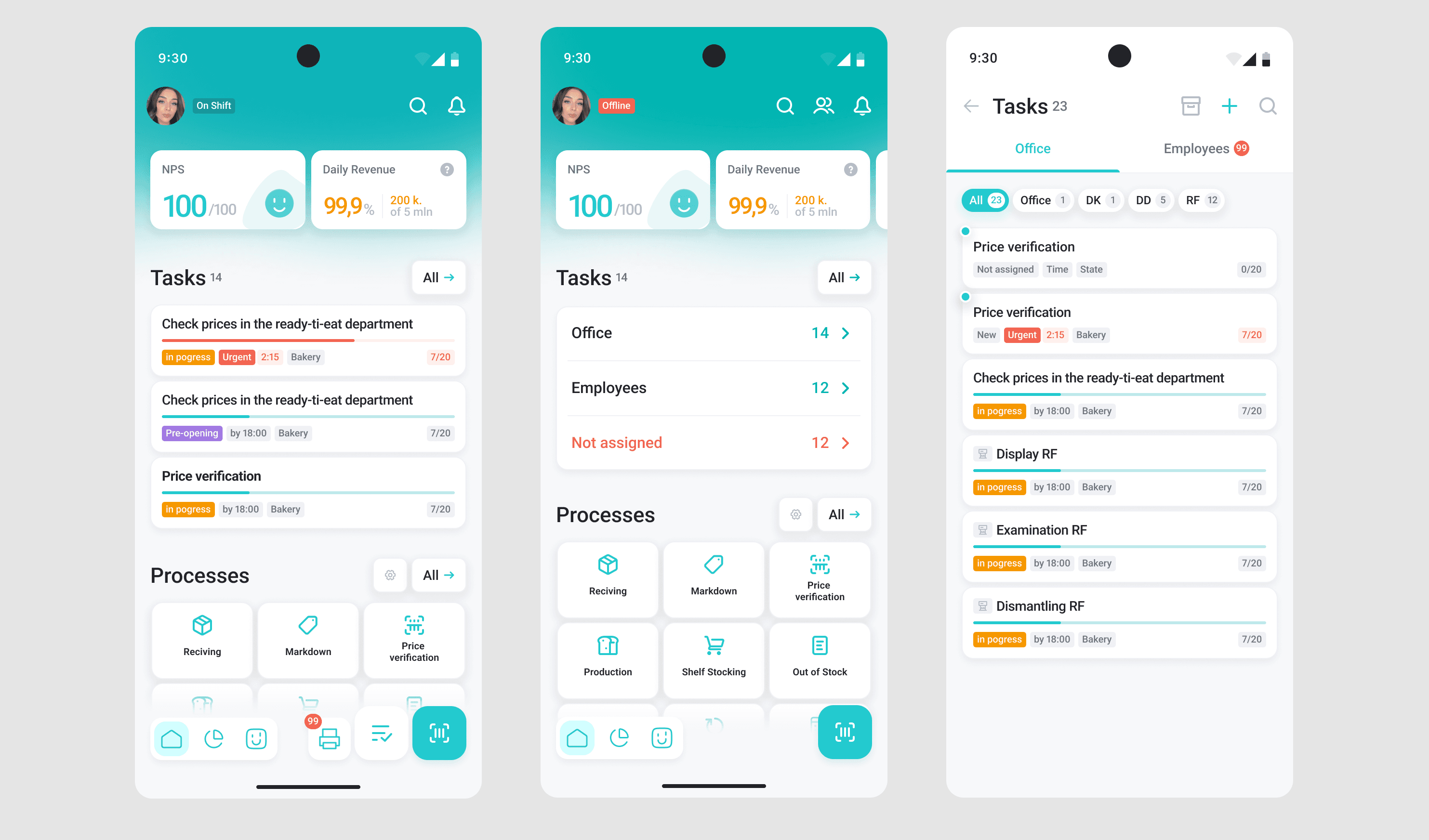
The visible request was to replace dedicated handheld scanners. Discovery revealed a deeper operational problem: store teams depended on fragmented tools, disconnected workflows, and limited visibility to complete everyday work.
We reframed the initiative as a platform transformation. Instead of recreating scanner behavior on a phone, the product unified task management, scanning, inventory workflows, and operational oversight within a shared mobile architecture.
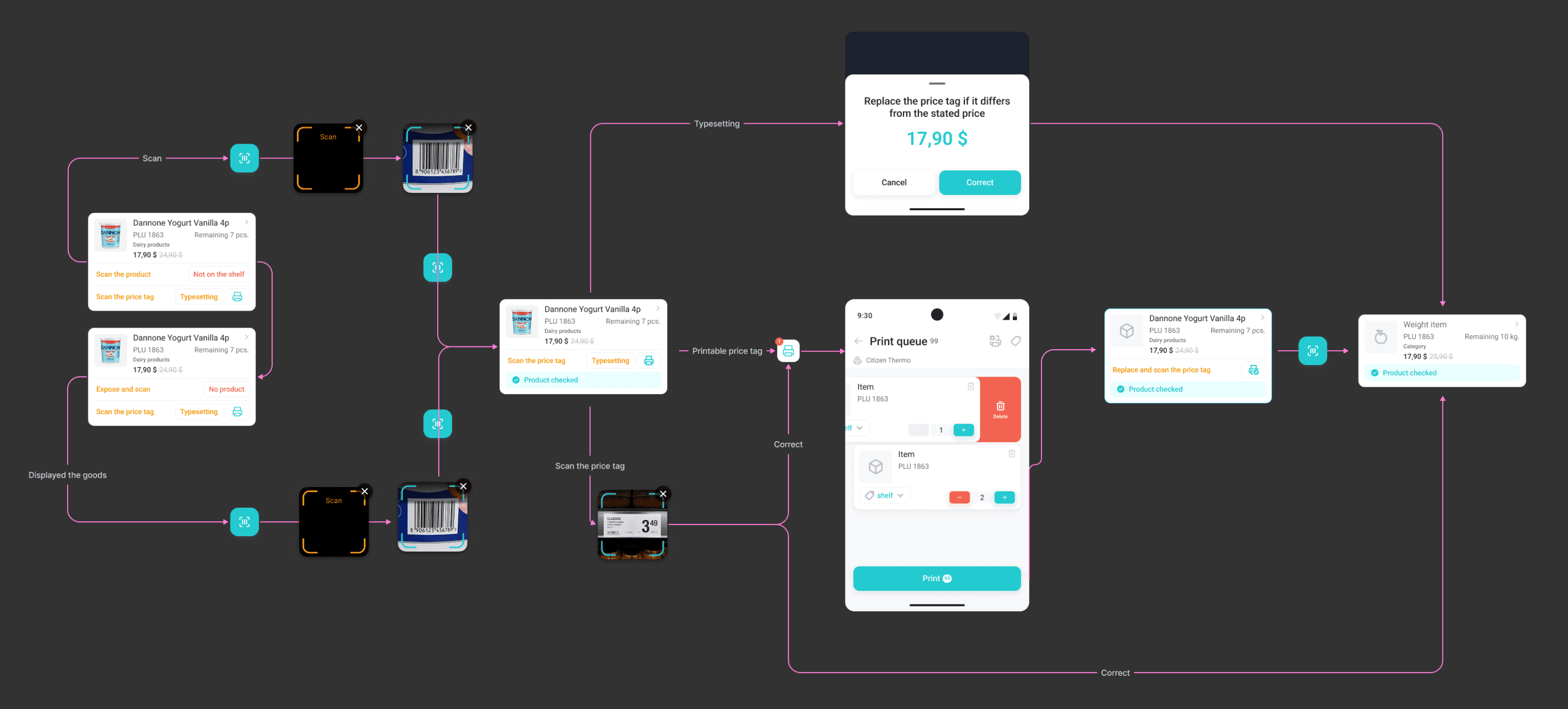
BUSINESS PROBLEM
Daily execution was split across separate tools. Employees switched context to finish routine tasks, while managers could see individual processes but not the full operational picture. As new workflows were added, complexity grew faster than the platform could support.
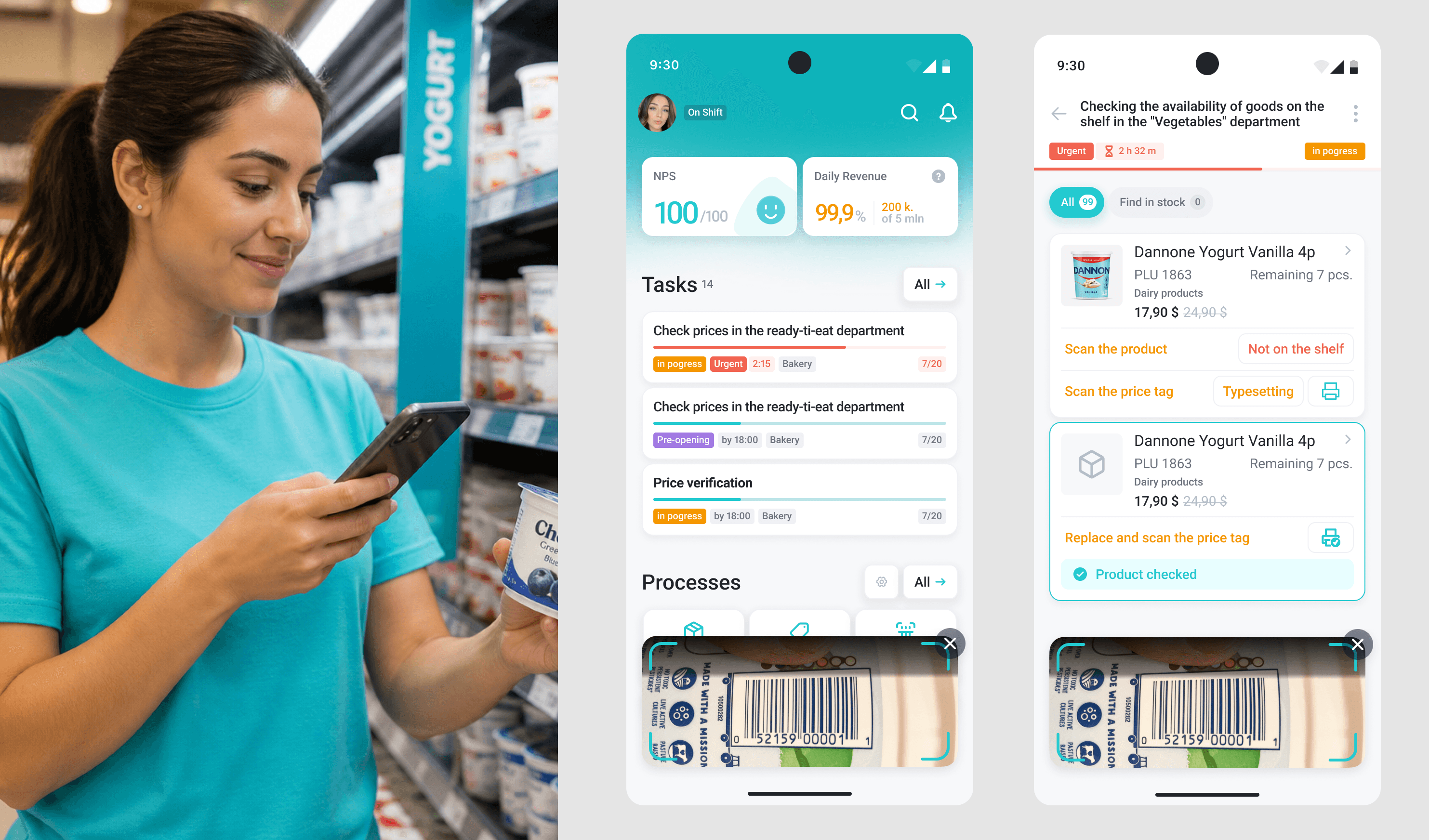
DISCOVERY INSIGHTS
We studied complete store journeys rather than isolated interface moments: how employees start a shift, receive tasks, scan products, resolve exceptions, and return to the next priority.
Four insights shaped the platform: scanning was part of larger workflows, roles needed different operating models, employees needed direction more than personal analytics, and consistent patterns would scale better than locally optimized screens.
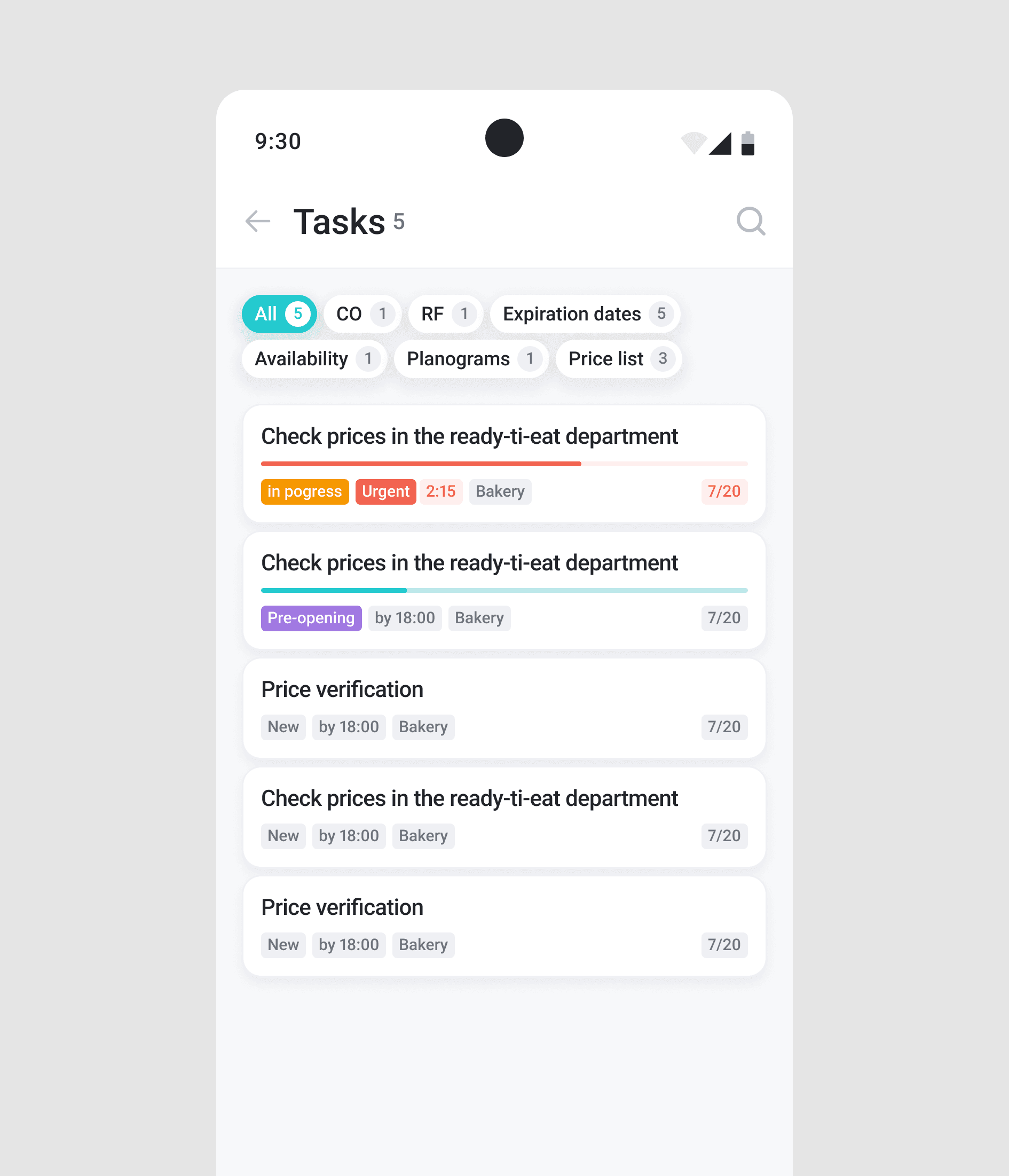
The goal became one device, one application, and one operational platform: a system that could absorb new workflows without increasing cognitive load for store teams.
OPERATIONAL MODEL
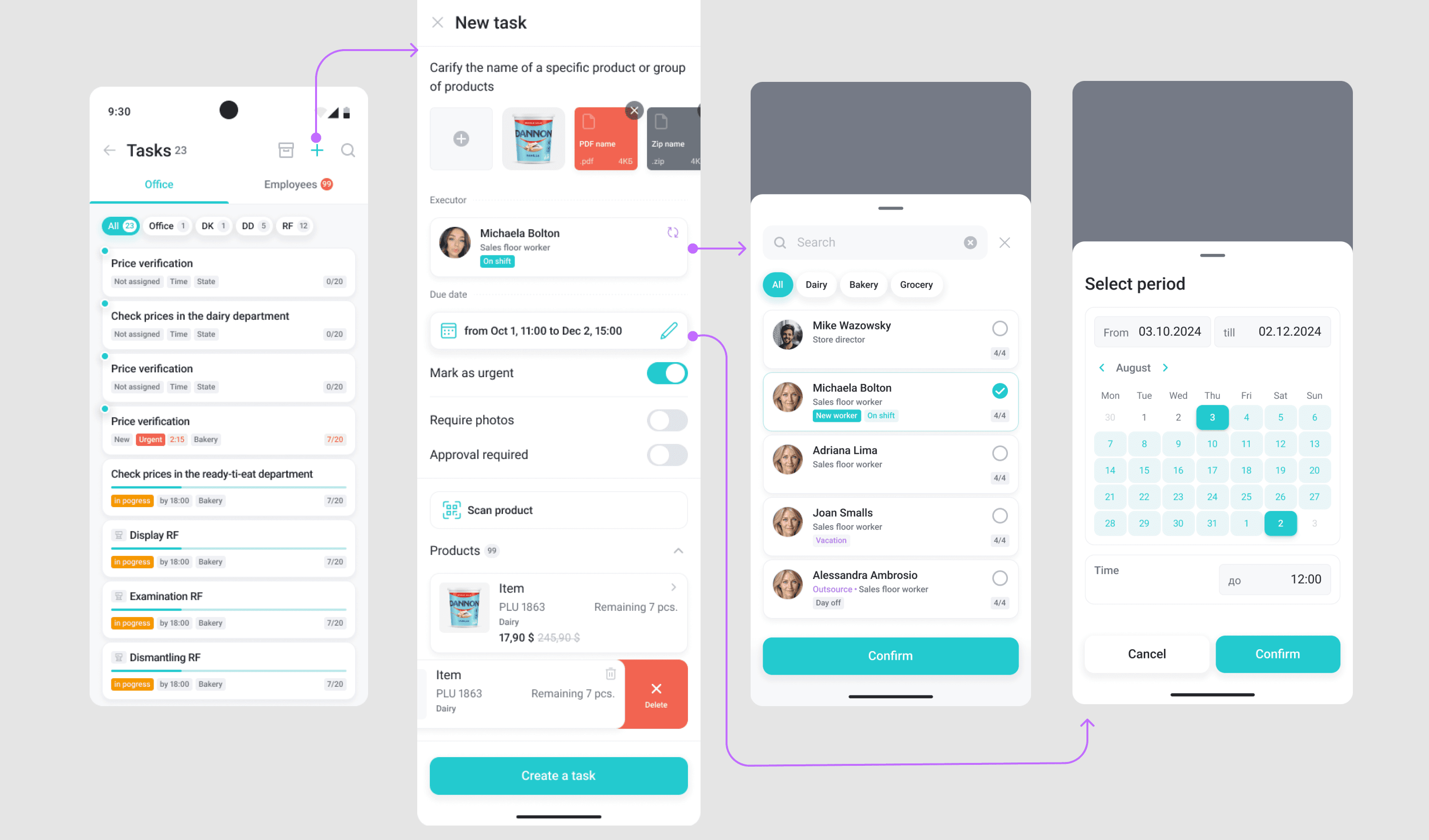
We separated urgent system-initiated work from employee-initiated operations. Tasks became the primary entry point, while scanning, inventory checks, price verification, and logistics tools stayed available inside the flow.
Customer Happiness and Daily Revenue became shared operational indicators, helping employees connect daily execution with business performance.
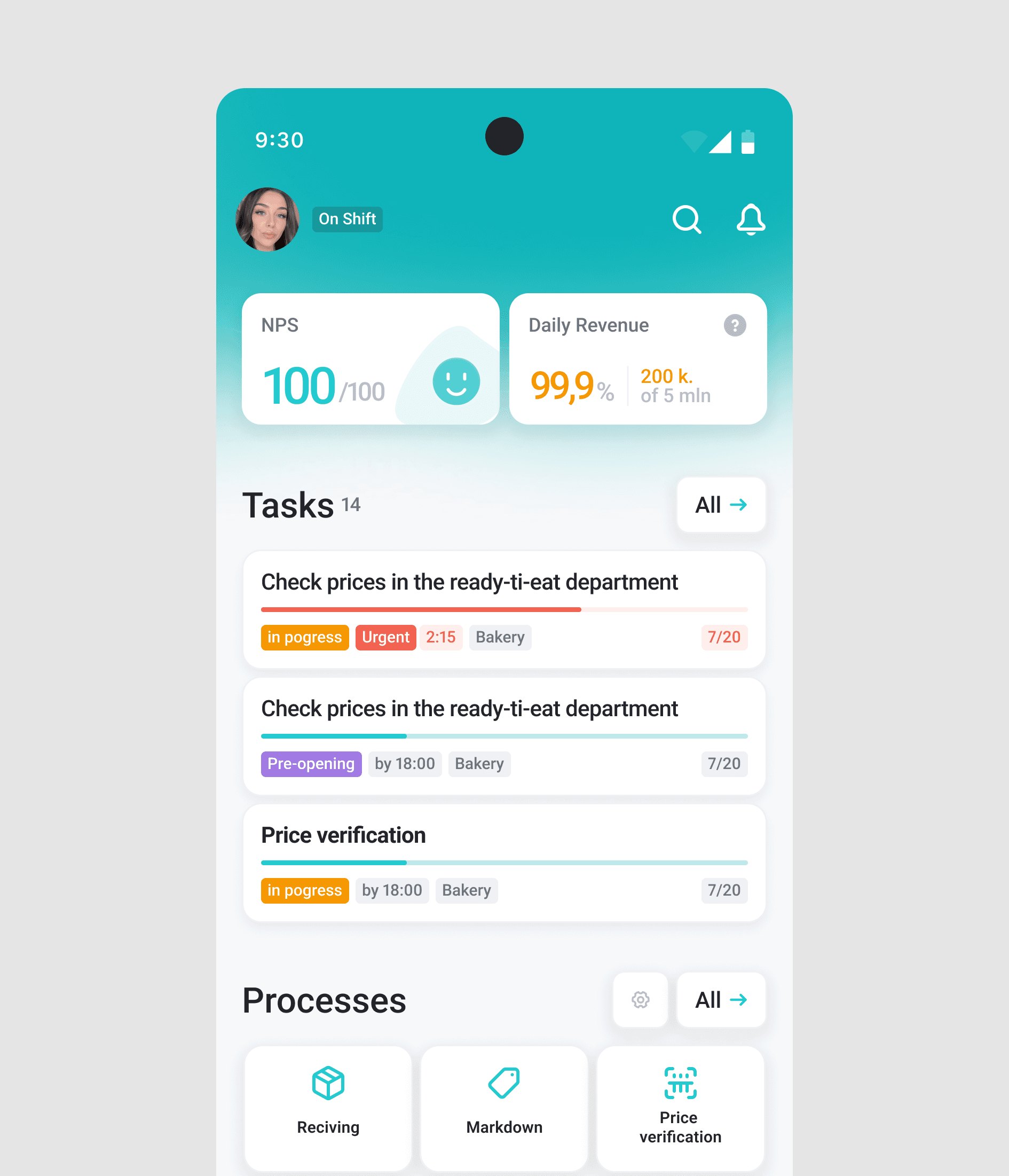
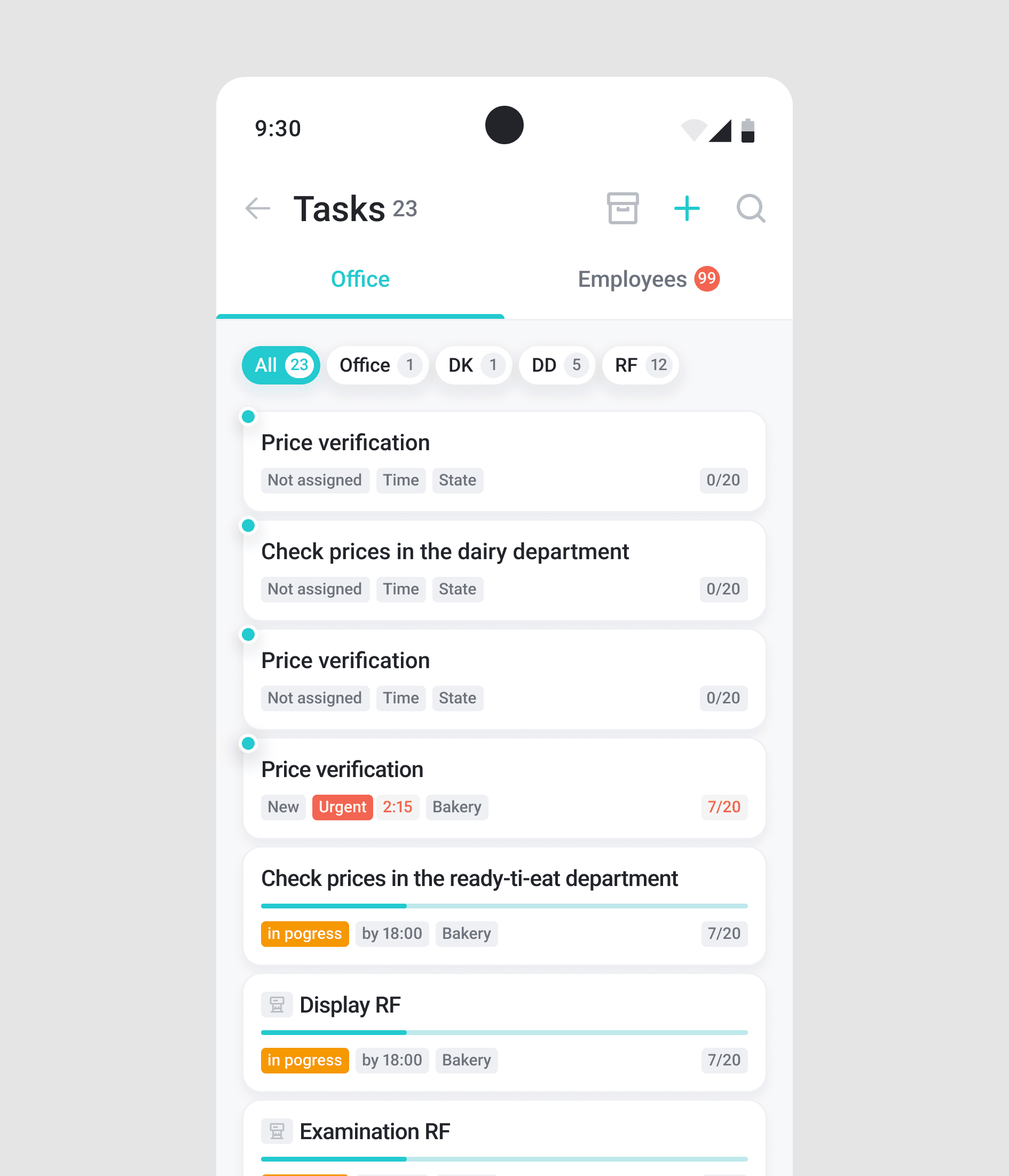
Associates entered a prioritized queue instead of a generic menu, reducing the effort needed to understand what mattered now.
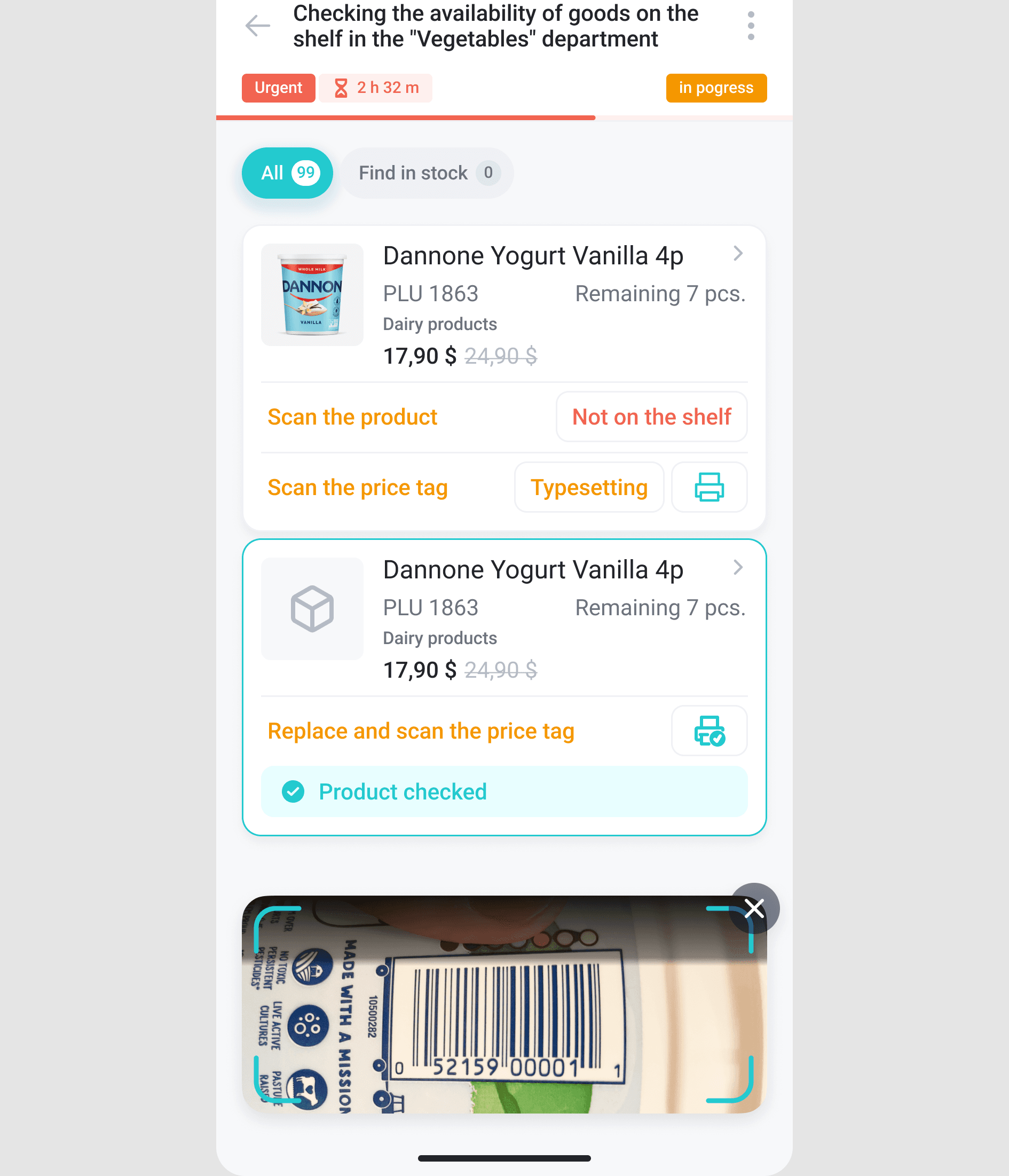
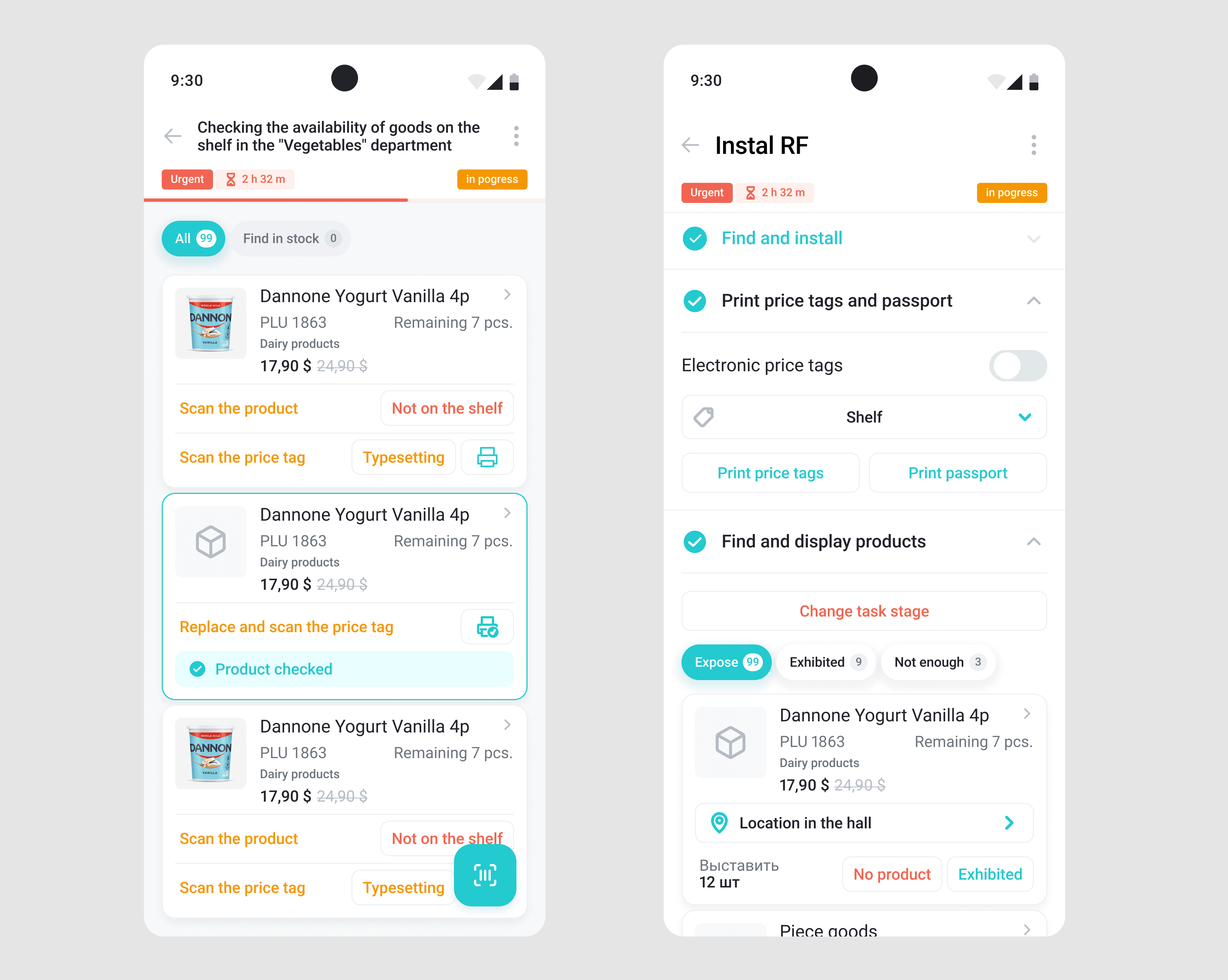
Scanning, inventory checks, label printing, and price verification became steps inside work rather than separate destinations.
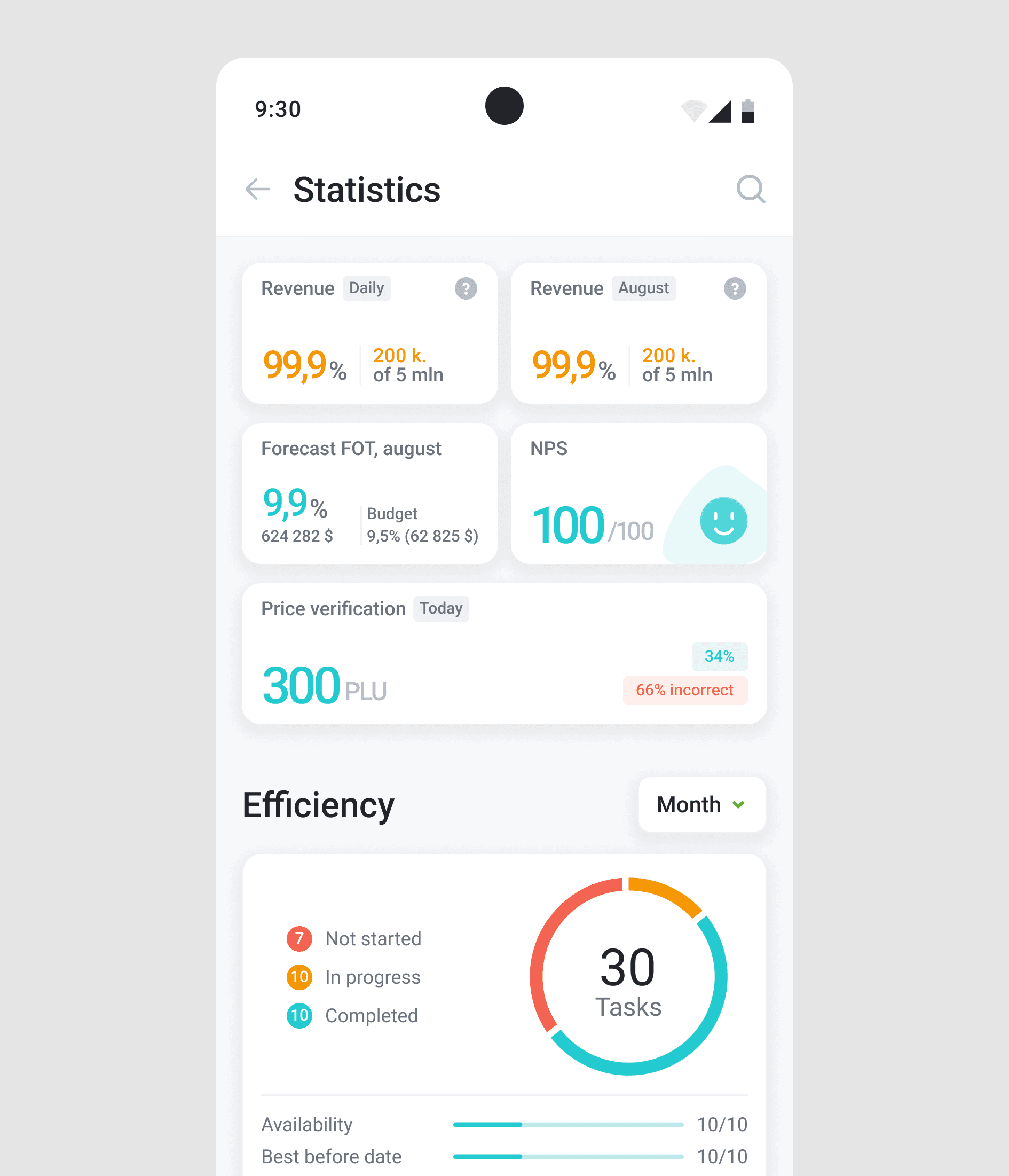
Managers received a dashboard focused on workload distribution, bottlenecks, and unresolved operational issues instead of raw activity noise.
CONSTRAINTS & LEADERSHIP
As a Seniour Product designer, I shaped the product architecture, facilitated discovery, aligned product decisions with business goals, and helped move design discussions from interface preferences toward operational efficiency.
The strongest design work happened inside constraints: legacy processes could not all be redesigned, business KPIs had to stay visible, and AI-assisted automation had to wait until the organization was ready to support it.
PLATFORM ARCHITECTURE
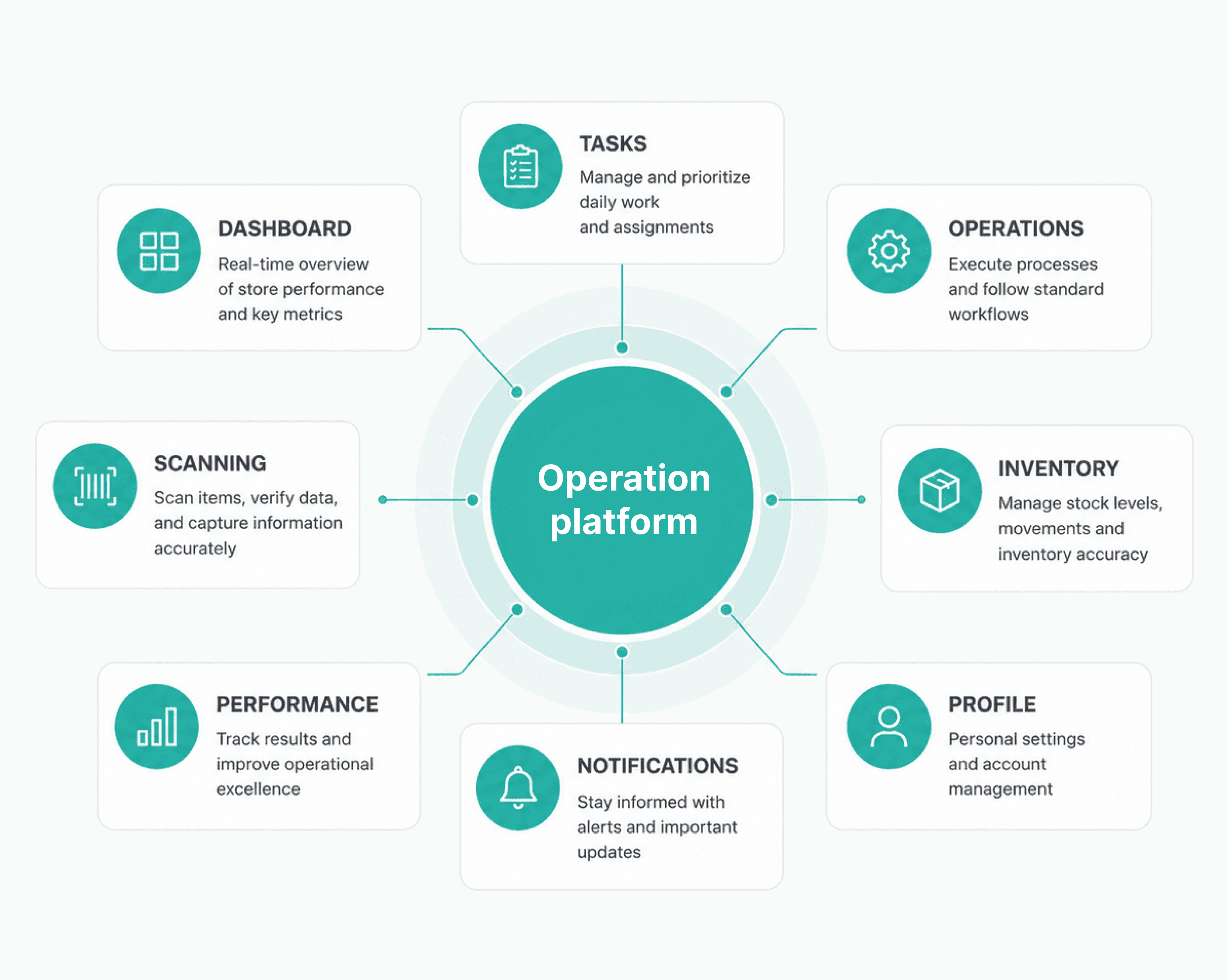
Instead of organizing the product around isolated features, we defined operational domains that gave users and product teams a shared mental model. This made the platform easier to learn, maintain, and extend.
Dashboard, Tasks, Operations, Inventory, Scanning, Performance, Notifications, and Profile gave every workflow a clear place in the system.
Recurring execution patterns were standardized so new operational workflows could be added without retraining employees on every process.
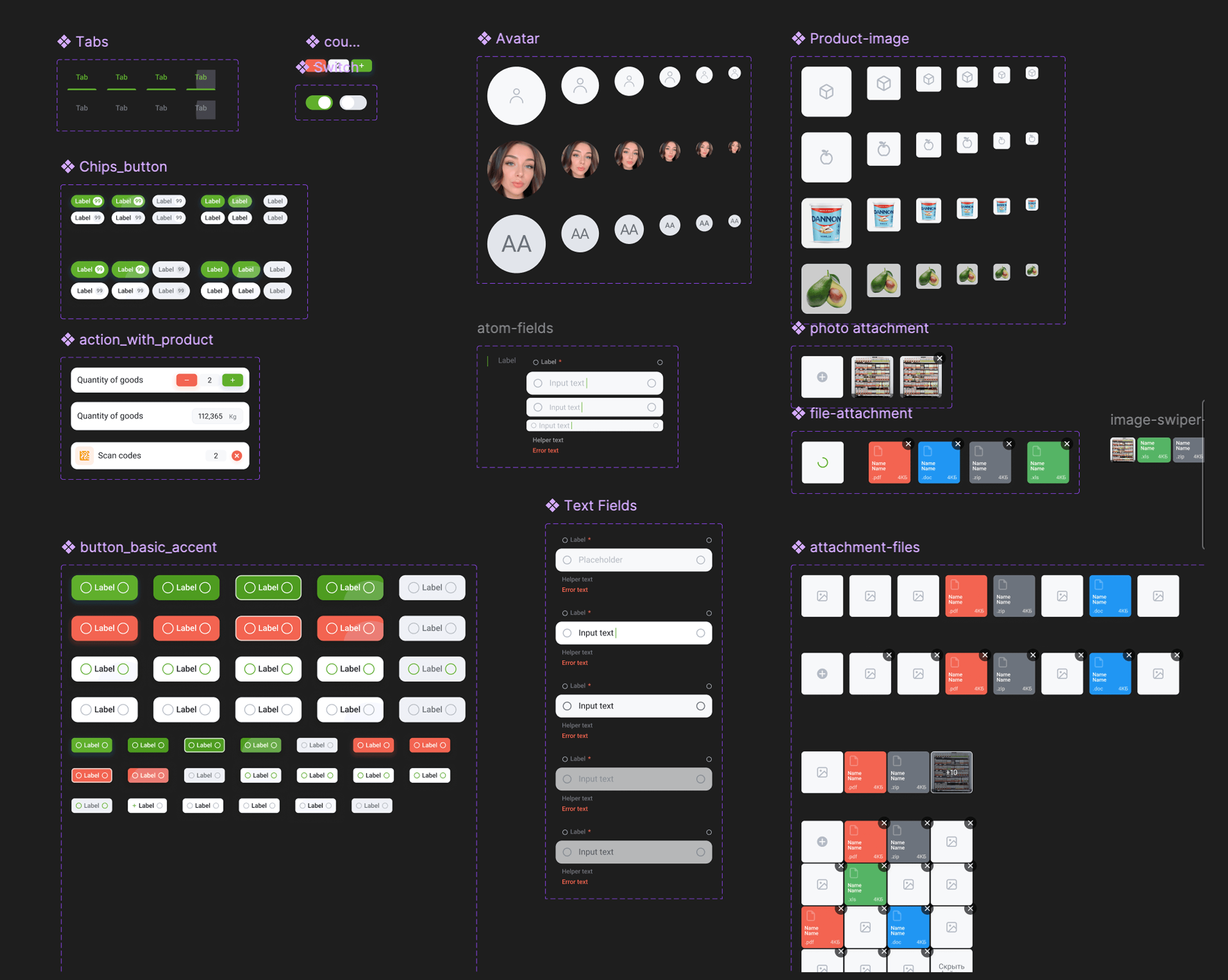
Shared components and interaction rules across Android and desktop reduced implementation ambiguity and supported a consistent operational experience.
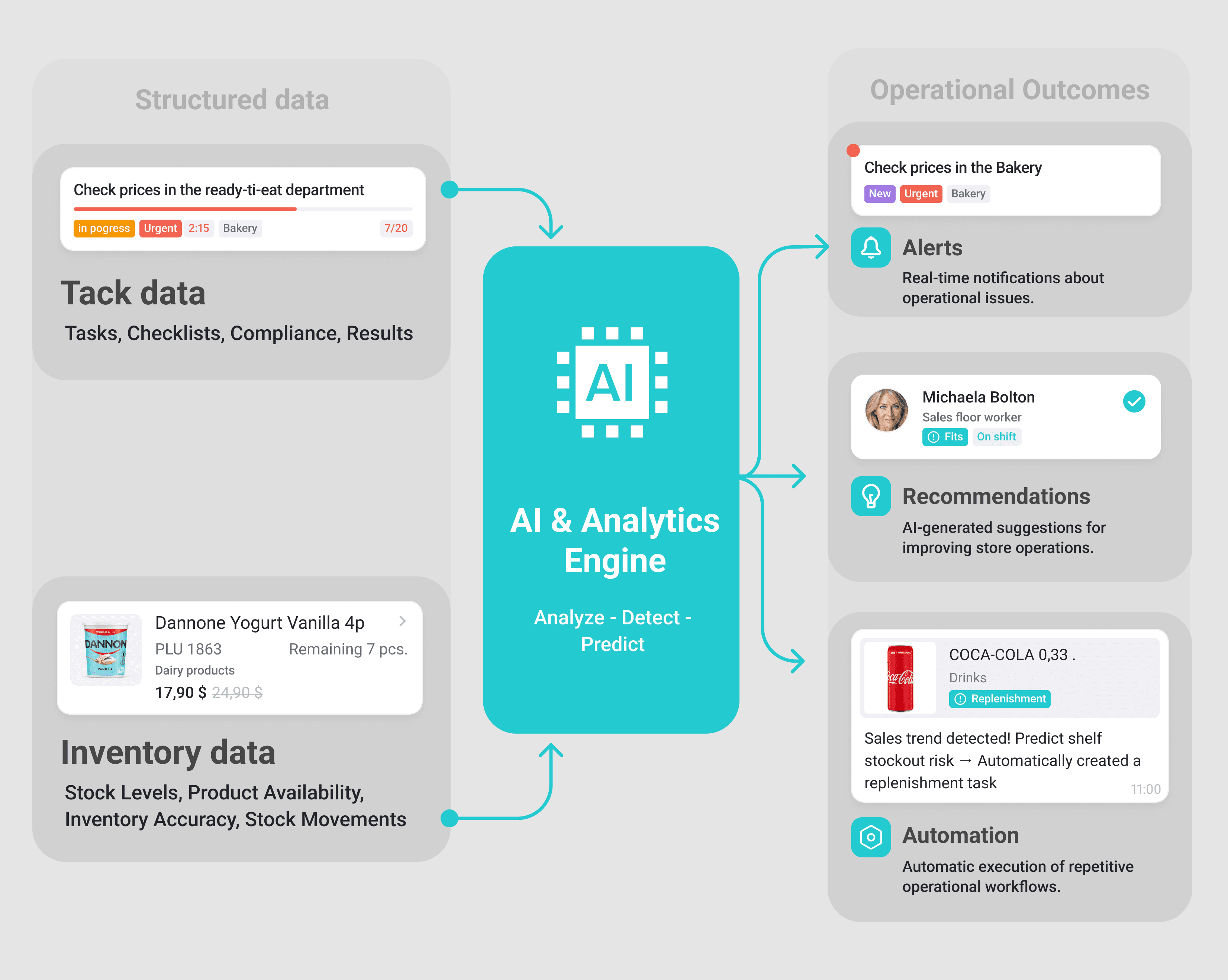
The architecture was prepared for future process automation and AI-assisted operations without adding disconnected AI features too early.
OUTCOMES
Product architecture has a longer-lasting impact than individual interface decisions.
Discovery is most valuable when it challenges the original brief and changes the product strategy.
Operational products should follow how work is performed, not how internal systems are organized.
The most scalable solutions balance user needs, business priorities, and organizational readiness.
Feel free to contact me if having any questions.
I'm available for new projects or just for chatting.
Herman Lewandowsky, 2026