
Challenge
Traditional educational products struggle to compete for children's daily attention. Lessons alone rarely create long-term habits when users spend most of their free time in games such as Roblox, Minecraft and Brawl Stars.
Joining Uchi.ru as a Product Designer, I worked on engagement systems that helped one of the largest EdTech platforms compete not only with other educational products, but with games for children's daily attention. Instead of shipping isolated gamification features, we built a connected engagement ecosystem that encouraged children to return every day while keeping learning at the center.
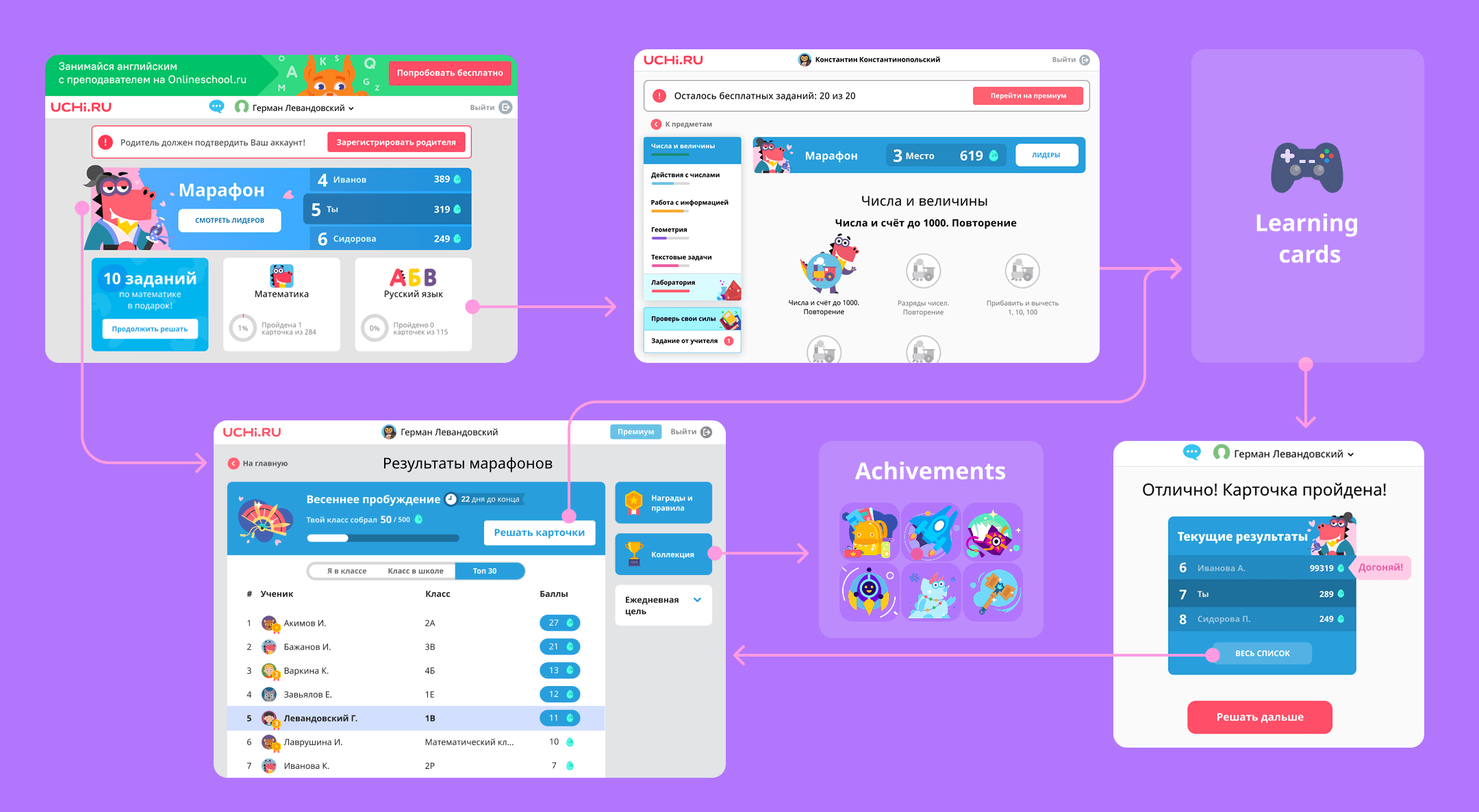
Traditional educational products struggle to compete for children's daily attention. Lessons alone rarely create long-term habits when users spend most of their free time in games such as Roblox, Minecraft and Brawl Stars.
Rather than adding disconnected features, we designed an engagement ecosystem where progression, seasonal events, leaderboards, cosmetics and rewards reinforced each other while keeping educational outcomes as the primary goal.
PRODUCT STRATEGY
The work extended beyond UI design. Together with product managers we explored engagement loops, monetization opportunities, retention mechanics and LiveOps systems. Every feature was evaluated as part of a larger behavioral system rather than an isolated release. The product strategy connected progression, rewards, seasonal activity and monetization into one repeatable system, so each new mechanic could reinforce the same engagement behavior.
ENGAGEMENT ECOSYSTEM
Instead of shipping isolated gamification features, the product evolved into a connected system of recurring engagement mechanics.
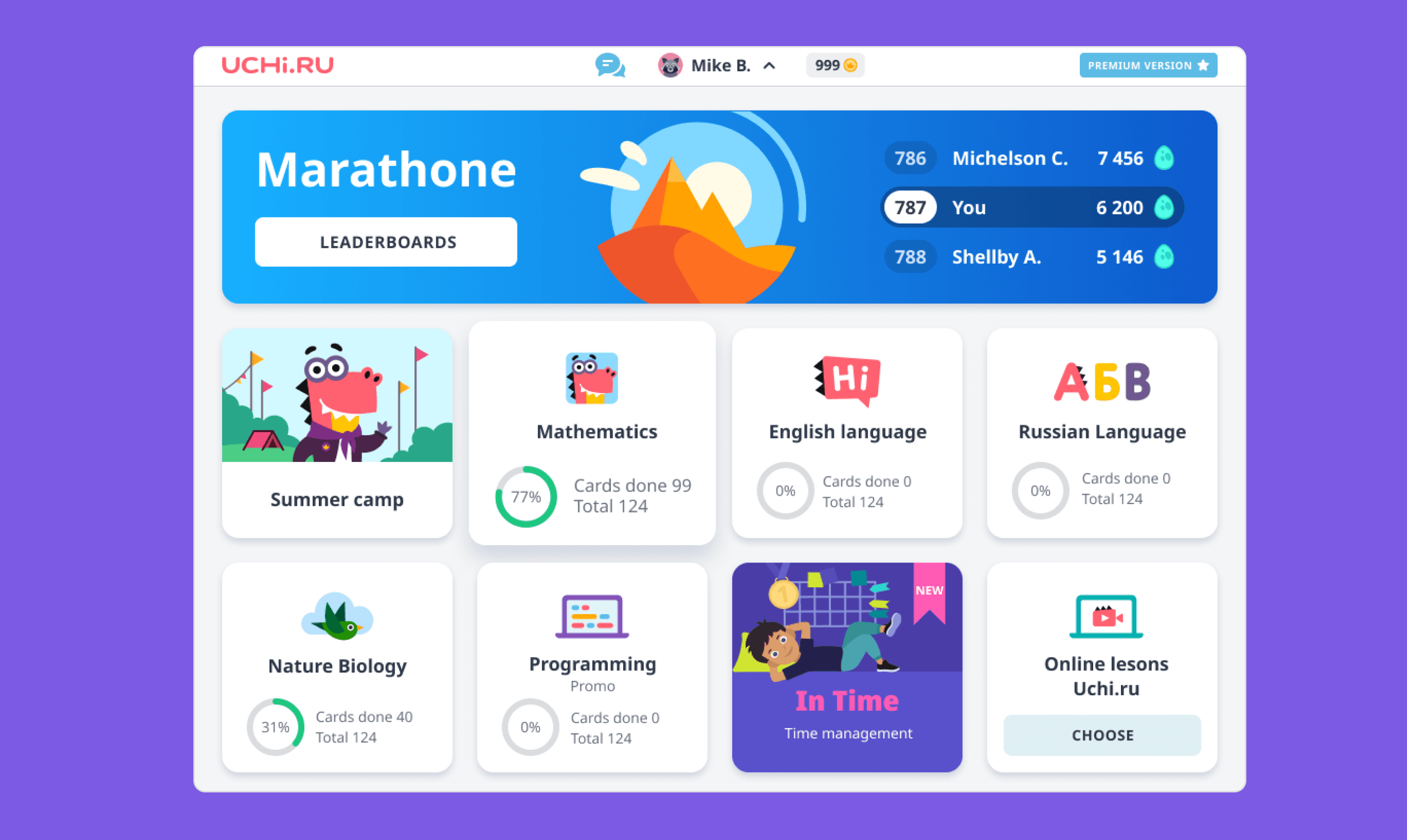
Seasonal competitions with refreshed visual identity, leaderboards and homepage promotion created recurring participation and increased subscription revenue.
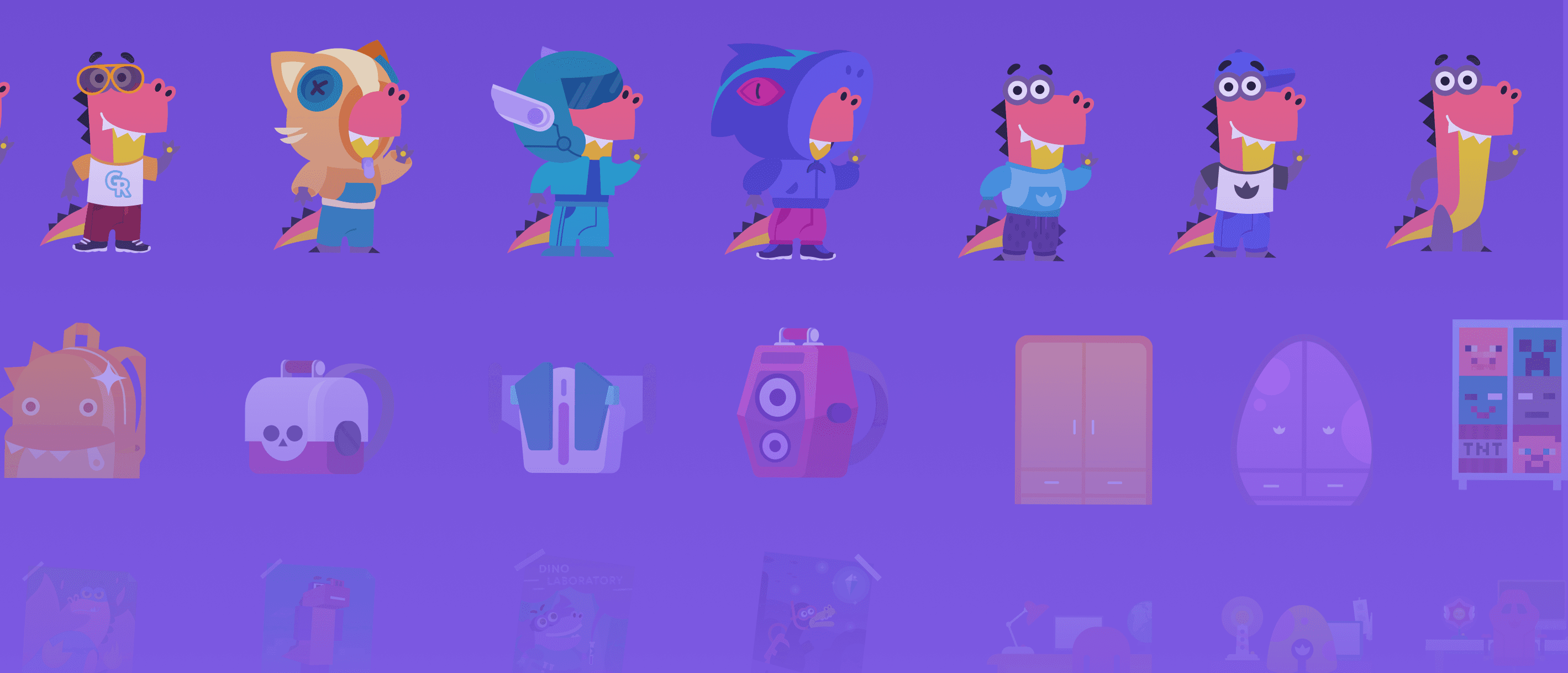
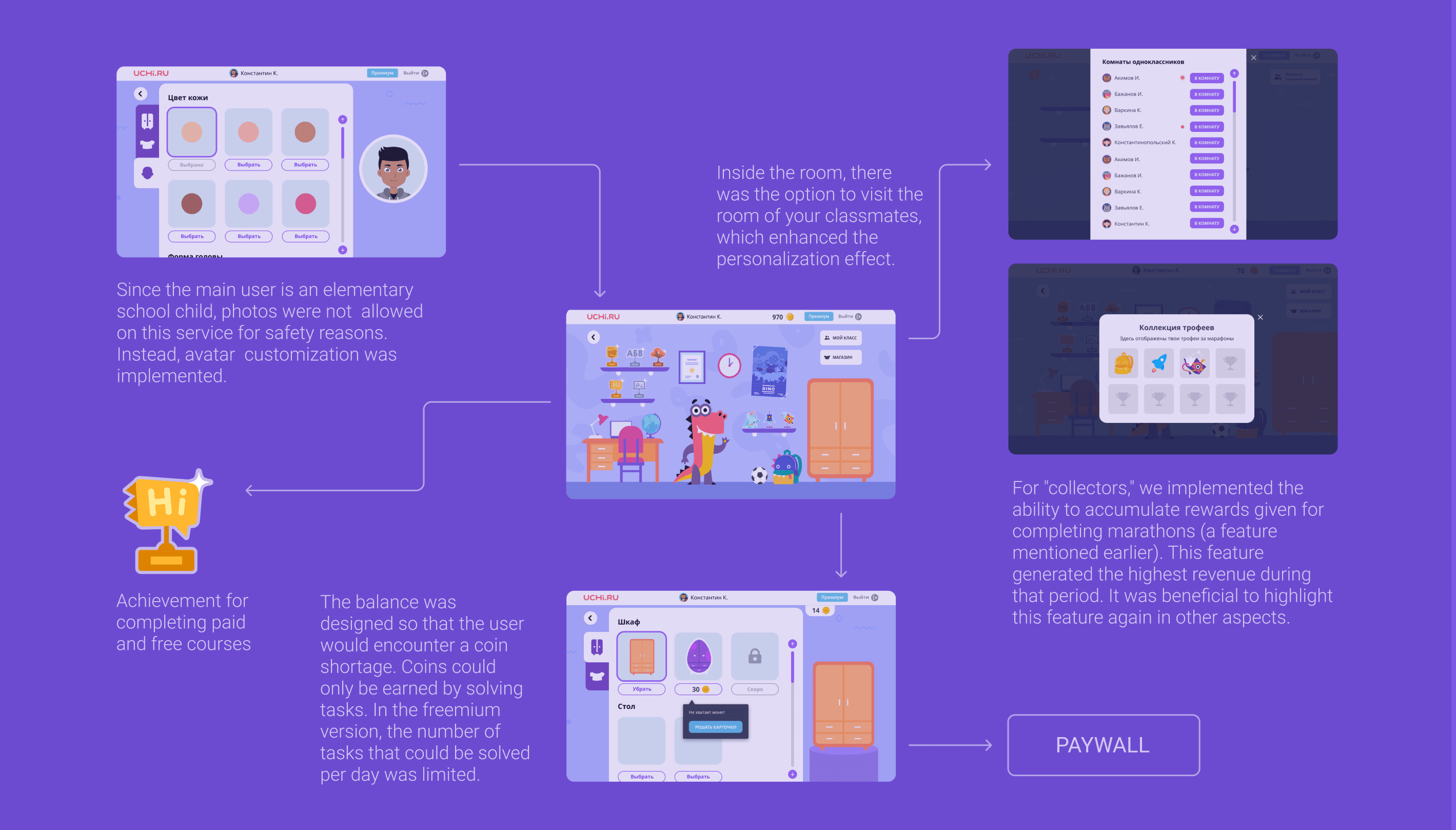
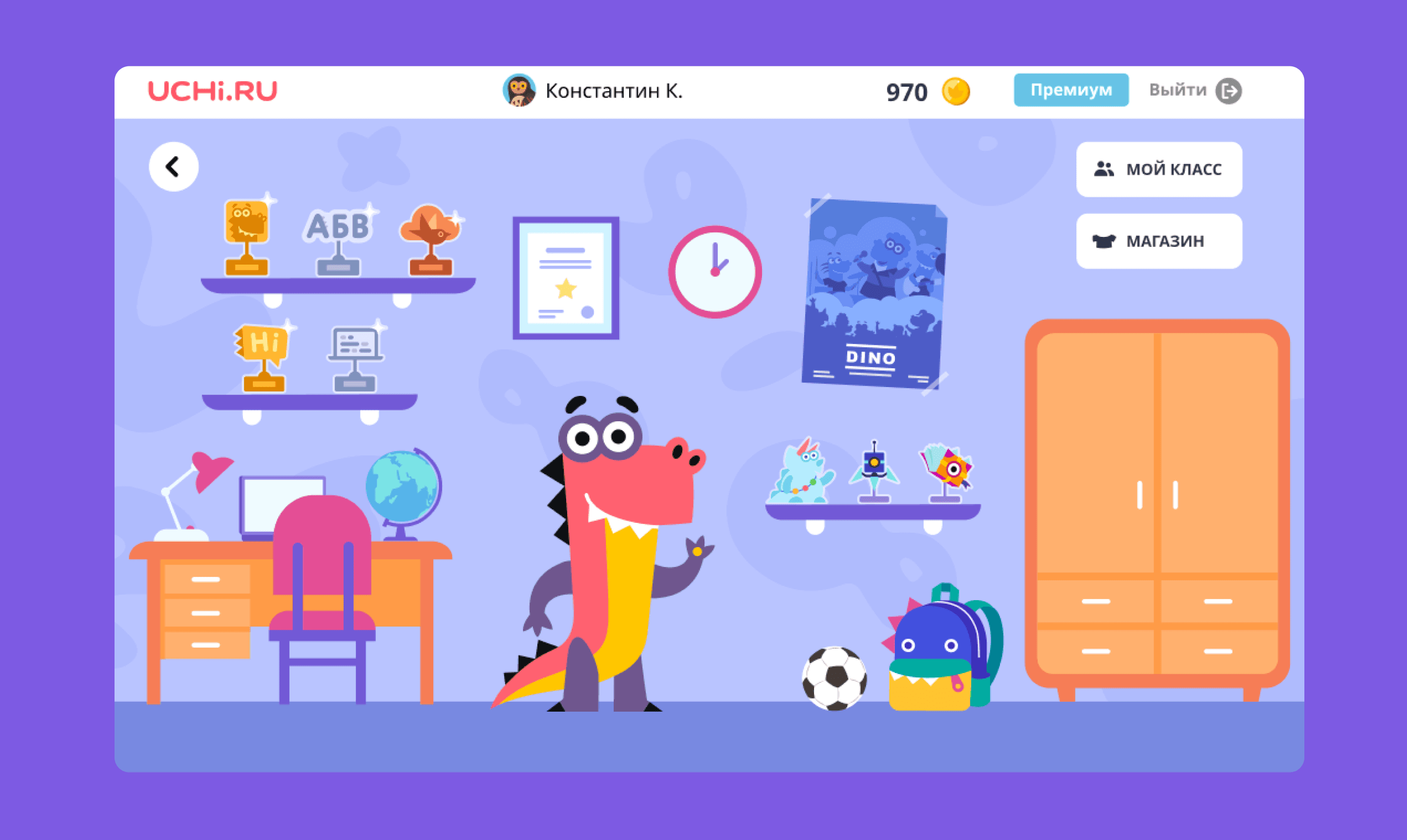
A customizable room gave children long-term progression through collectible cosmetics purchased with earned in-product currency, increasing repeat visits.
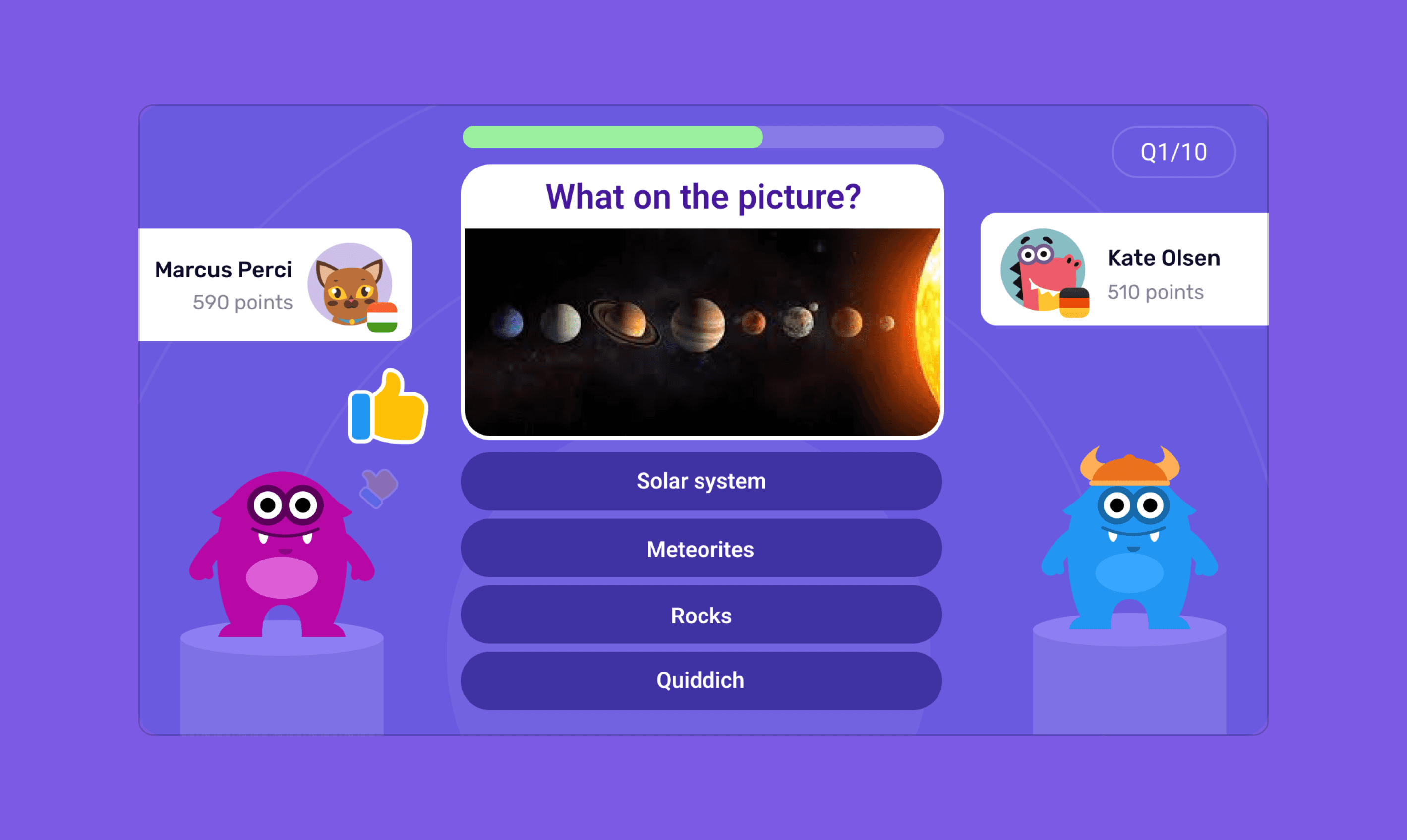
A previously underperforming acquisition game was redesigned with competition, scarcity and stronger progression to improve premium conversion.
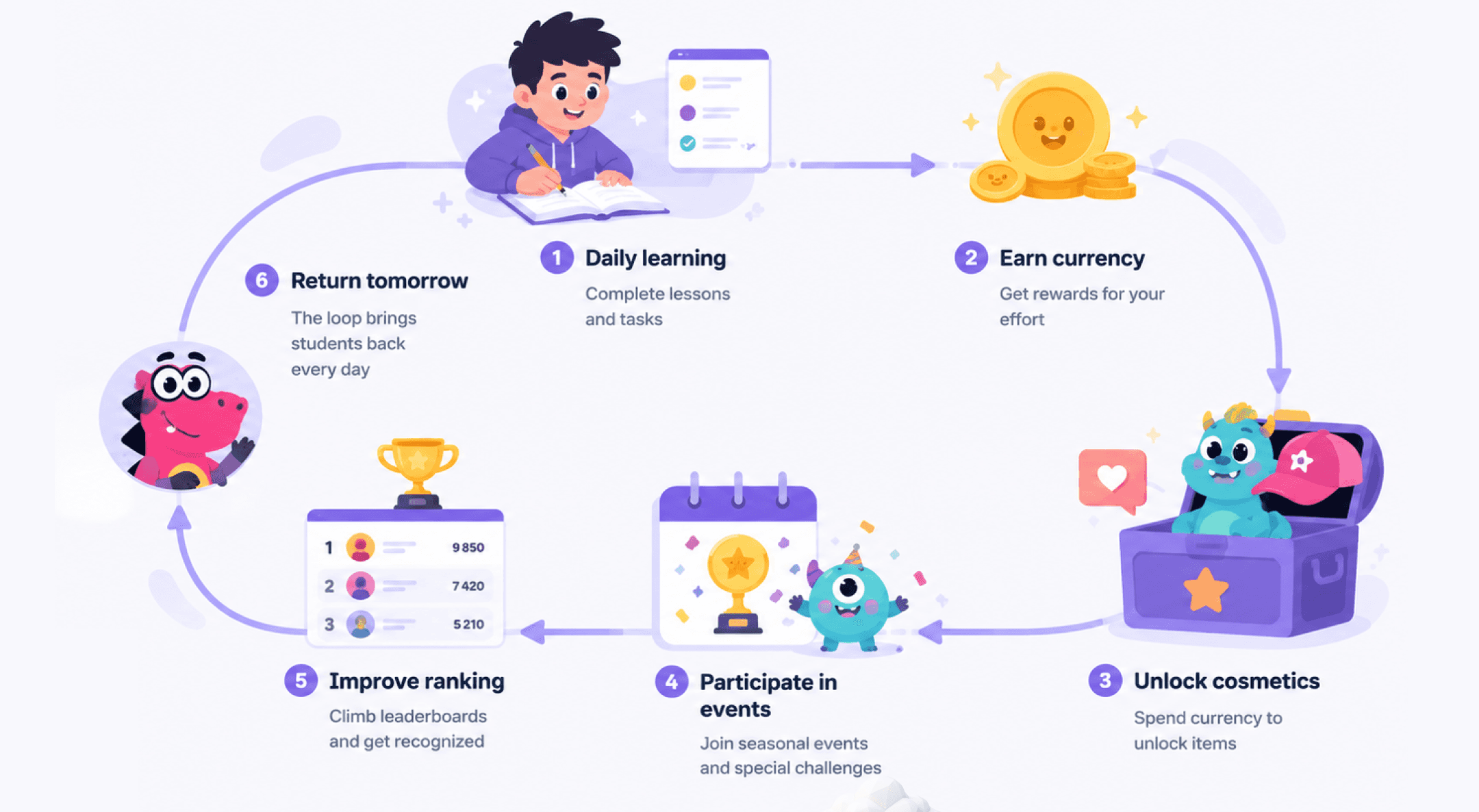
BEHAVIOR LOOP
Daily learning -> earn currency -> unlock cosmetics -> participate in seasonal events -> improve ranking -> return tomorrow. The system was designed so mechanics supported each other instead of competing for attention.
DESIGN CONSTRAINTS
The product had to feel engaging for children while staying understandable for young students, acceptable for parents and consistent with the existing learning platform. It also had to account for teachers, who act as administrators in the learning process, and parents, who supervise the child's experience and renew subscriptions. The service worked as a connected triangle: teachers recommend the product, children learn and return, and parents decide whether the value is strong enough to keep paying.
ENGAGEMENT ECOSYSTEM
Instead of shipping isolated gamification features, the product evolved into a connected system of recurring engagement mechanics.
Seasonal competitions with refreshed visual identity, leaderboards and homepage promotion created recurring participation and increased subscription revenue.
A customizable room gave children long-term progression through collectible cosmetics purchased with earned in-product currency, increasing repeat visits.
A previously underperforming acquisition game was redesigned with competition, scarcity and stronger progression to improve premium conversion.
OUTCOMES
Children return because they anticipate progression, not only educational content.
Connected systems outperform isolated gamification features.
Cosmetic rewards are effective when earned through meaningful activity.
LiveOps extends product lifespan without redesigning the core experience.
Behavior design should reinforce learning, never replace it.
Feel free to contact me if having any questions.
I'm available for new projects or just for chatting.
Herman Lewandowsky, 2026